Huntersville Polyaspartic Top Coat
Polyaspartic is the topcoat on most floors we install. It cures in hours rather than days, it does not amber in sunlight, and it holds its hardness when a Carolina garage sits hot for weeks.
What the chemistry actually buys you
Polyaspartic is a polyurea rather than an epoxy, and the practical differences are speed, UV stability and heat performance. It cures fast enough that a garage can be back in service the following day, it does not yellow in sunlight, and it stays hard at the temperatures a slab reaches here in August.
That last point matters more in this climate than people expect. Hot tire pickup is fundamentally a softening problem: a topcoat that goes slightly soft at temperature releases when a hot tire sits on it. A polyaspartic topcoat holds hardness through that, which is why we specify it on garages rather than a cheaper clear.
The trade is working time. Where an epoxy gives a comfortable window to spread and adjust, polyaspartic sets fast enough that the crew has to be organized and moving. That is our problem rather than yours, but it does mean this is not a system to hand to an inexperienced installer.
Where it earns the cost
One-day turnaround
Grind and coat in a day, walkable that evening, vehicles the next. For a working floor that is usually worth more than the material difference.
UV stability
It does not amber in sunlight, so outdoor and sun-exposed floors do not need a separate protective layer added over them.
Heat hardness
Holds up when a slab sits hot for weeks, which is the specific failure mode behind most hot tire pickup we get called to fix.
Over flake
Most often it is the clear over a chip broadcast rather than a floor on its own. The flake gives thickness, the polyaspartic gives speed and UV resistance.
The honest way to decide
Price the downtime rather than the coating. If a room being out of service for three days costs you nothing, a standard epoxy with a decent topcoat is the sensible spend and we would rather quote that than upsell you.
If those days cost you a weekend of trade, a week of production, or simply mean the garage is unusable while you need it, polyaspartic pays for itself on the first install and every one after it.
Polyaspartic buys time and heat tolerance. If neither is worth anything on your job, you probably do not need to buy it.
Outdoors it is usually the first recommendation rather than an upgrade. Rather than putting epoxy down and adding UV protection over it, polyaspartic is UV-stable through the chemistry itself, which is a simpler and more durable arrangement on a patio or pool surround taking full Carolina sun.
A standard residential garage is often a single day for grind and coat, walkable that evening and vehicles the following day. Larger or more damaged slabs need more prep, and that is what extends a timeline rather than the coating itself.
One practical note on scheduling. Because polyaspartic finishes a floor in a day, it is often what makes a job possible at all around a family calendar or a business week rather than simply being faster. Clients who could not give up a garage for three days can usually give up one, and that is the real reason it ends up on most of our residential work here.
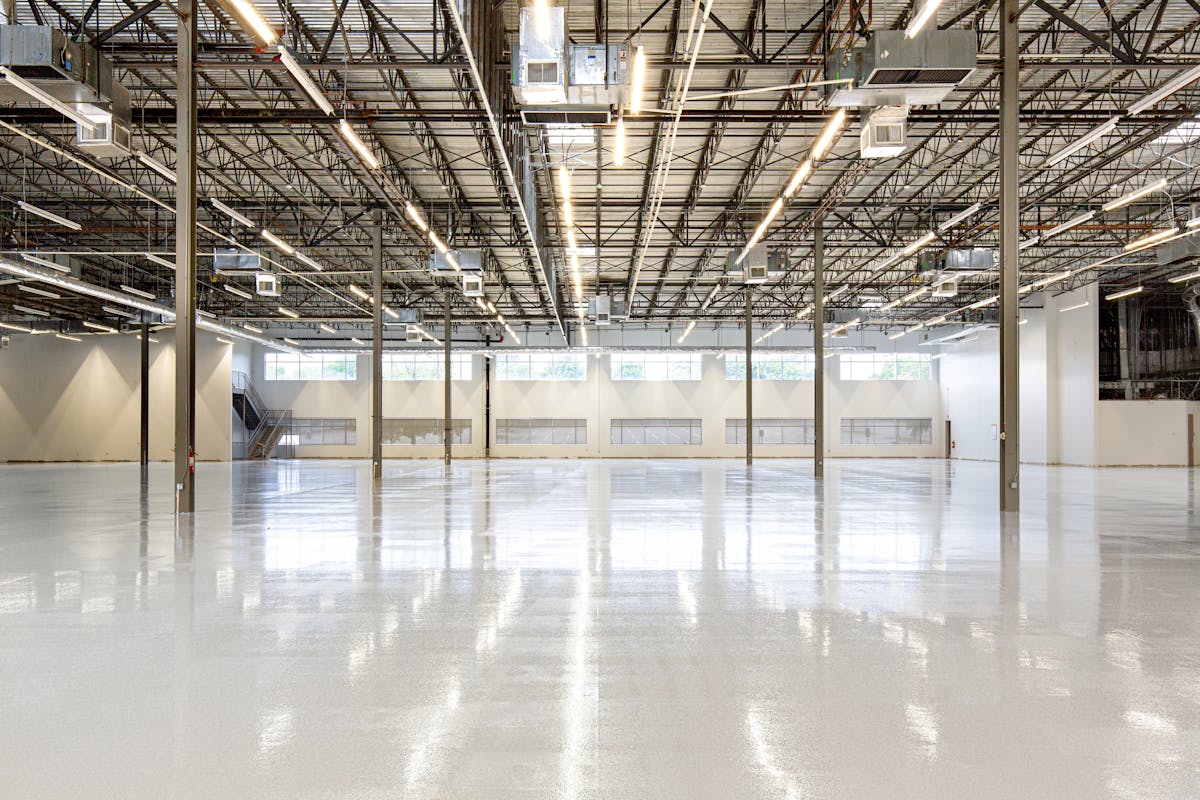
Polyaspartic is the topcoat on most garage floors and on nearly all outdoor work, and it is what makes a fast commercial turnaround possible. Full detail on the main polyaspartic top coat page. We serve Huntersville and Mecklenburg County.
Huntersville Polyaspartic Top Coat FAQ
Is it really a one-day job?
For a standard residential garage, usually: grind and prep in the morning, coat in the afternoon, walkable that evening and vehicles the next day. Larger or more damaged slabs need more prep and that is what extends the timeline, not the coating chemistry. We will tell you at the walkthrough which one you have.
Why does it cost more than epoxy?
The material is more expensive and the install demands a faster, more organized crew because the working window is short. What you get is speed, UV stability and heat hardness. Whether that is worth the difference depends on your job, and we will say so honestly rather than defaulting to the pricier option.
Will it yellow in Carolina sun?
No. Polyaspartic is UV-stable through the chemistry itself rather than needing a protective coat added over it. That is why it is the default on anything outdoors here, and why we do not put standard epoxy on a patio regardless of what it costs.
Does it stop hot tire pickup?
It is the main reason we specify it on garages. Hot tire pickup is a softening problem, and polyaspartic holds hardness at the temperatures a Carolina slab reaches in summer. A cheaper clear coat softens just enough for a hot tire to release it, which is exactly the failure we get called to replace.
Is it used alone or over flake?
Most often as the clear topcoat over a chip broadcast. That combination is what we install most: flake for thickness and texture, polyaspartic for cure speed, UV stability and heat performance. As a standalone pigmented floor it is common in commercial rooms that need speed.
How does humidity affect it?
Carolina humidity does affect cure, and polyaspartic is more sensitive to it than epoxy during application. That is a crew planning matter rather than a product limitation: we watch conditions and manage an enclosed space rather than coating into whatever the weather happens to be doing.
Get polyaspartic quoted in Huntersville
Tell us what the room is and when you need it back. If polyaspartic is not the right spend for your job, Robert will say so and quote what is.
Talk to Robert Call (704) 775-1120
Finished floors are in the gallery, or send Robert the details.